Paper mills across South Africa are under increasing pressure to reduce freshwater intake, cut operational costs, and meet stricter environmental standards. One of the most effective ways to achieve this is through white water recycling, an advanced approach that recovers usable fibres, reduces chemical consumption, and significantly lowers total water demand.
As mills transition toward closed-loop operations, modern water recycling technology and engineered treatment systems are reshaping how South African mills manage process water. The goal is simple — recycle more, waste less, and improve efficiency at every stage of papermaking.
Table of Contents
ToggleWhy Water Recycling Matters for South Africa’s Paper Sector?
South Africa faces growing water scarcity, rising industrial tariffs, and environmental compliance requirements. For paper mills — among the largest industrial water users — dependency on freshwater is no longer sustainable.
Recycling water inside the mill helps address major challenges:
- High water consumption in pulping, screening, washing, and paper machine sections
- Increased cost of raw water abstraction
- Fibre loss in white water streams
- Rising effluent discharge fees
- Need for more sustainable production practices.
With the right water recycling system, mills can reduce fresh water intake by up to 40–60%, depending on process design and grade of paper produced.
What Is White Water and Why Recycle It?
White water is the dilute fibre-rich stream drained from the wire section of the paper machine. It contains:
- Fines and fibres
- Fillers and additives
- Dissolved solids
- Process chemicals
Historically, this water was used once and then discharged. Modern paper mills in South Africa are opting to recover and reuse it instead.
Recycling wastewater enables:
- Higher fibre recovery
- Reduced fresh water demand
- Lower chemical dosing
- More stable machine operation
- Reduced load on effluent treatment
Well-designed water recycling equipment ensures that white water is clarified, cleaned, and reused efficiently without compromising paper quality.
Technologies That Power White Water Recycling
A combination of mechanical, biological, and membrane technologies helps mills create a closed-loop water recycling system. Key components include:
1. Save-All Systems (Disc Filters / Drum Filters)
Recover fibres, fines, and fillers that would otherwise be lost.
2. Clarifiers and DAF Units
Remove suspended solids, stickies, and contaminants.
3. Ultrafiltration (UF)
Ensures consistent water clarity for reuse in showers and dilution stages.
4. Reverse Osmosis (RO)
Used in advanced setups to polish water for high-quality reuse applications.
5. Biological Treatment Units
Break down dissolved organics to prevent process build-up.
These technologies can be combined to create reliable industrial wastewater recycling systems tailored to each mill’s water balance.
Benefits for Paper Mills in South Africa
Switching to modern water recycling solutions offers measurable benefits, including:
1. Reduced Freshwater Intake
Significant reduction in borewell, municipal, or river water dependency.
2. Lower Production Costs
Less chemical consumption
Lower steam and energy use
Reduced effluent handling expenses
3. Improved Fibre Yield
Recovered fibres boost pulp efficiency, lowering raw material demand.
4. Stable Paper Machine Performance
Minimised scaling, foaming, and chemical fluctuations.
5. Compliance with Environmental Regulations
Reduced TSS, COD, and organic load in final discharge.
6. Better Long-Term Sustainability
Supports circular economy initiatives and corporate environmental goals.
These benefits position water recycling as one of the most impactful investments for paper mills prioritising sustainability and cost competitiveness.
How Ion Exchange Supports Water Recycling in Paper Mills?
ITC – Tribeni Tissues Division – White Water Recycle
The unit faced problems in treating “White Water”, a term for process wastewater containing fine particulate matter fibres and fillers like titanium dioxide used in the specialty paper-making process.
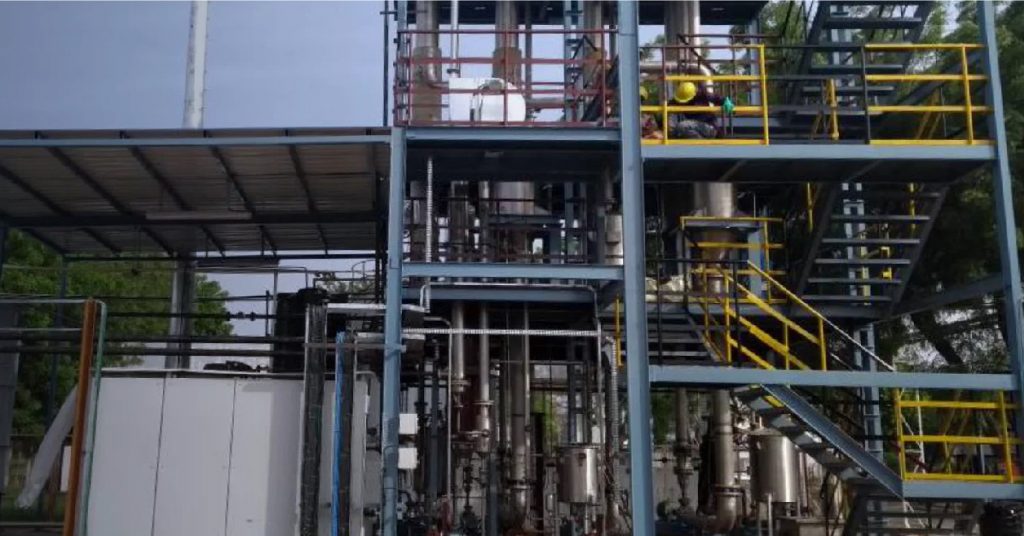
Ion Exchange has installed a White Water Recycling system with a capacity of 11,000 m3/d for the recovery of water, fibres, and fines, and reusing them in the paper manufacturing process. The recovery process utilizes a High Rate Solids Contact Clarifier and Continuous Sand Filter along with specialty coagulants and flocculants for enhancing solids recovery.
The Continuous Sand Filter provides several benefits over conventional sand filters, which require frequent backwashing, thereby reducing the effective operating time. This advanced, but highly simplified and efficient technology, when applied (along with High Rate Solids Contact Clarifier) for recycling of water from the mills, can recover fibre, filler chemicals, and at the same time recycle quality treated water into the process. Continuous Sand Filters deliver superior treated effluent quality and require significantly lower footprint while delivering consistency in treated water quality. Thu, ITC Tribeni could achieve 98% water recovery with less than 5 PPM of suspended solids, allowing the treated white water to be reused directly in the paper mill without clogging the showers. 99% fibres, which are also recovered, are reused in paper-making, thus helping to meet the circular economy goals of the paper industry.
Conclusion
White water recycling is no longer optional for the paper industry in South Africa. It is a strategic necessity that improves efficiency, reduces costs, and supports long-term water sustainability. With advanced water recycling processes, mills can operate more reliably while reducing their environmental footprint.
Connect with Ion Exchange experts today to explore customised water recycling solutions that enhance efficiency and sustainability for your South African paper mill.