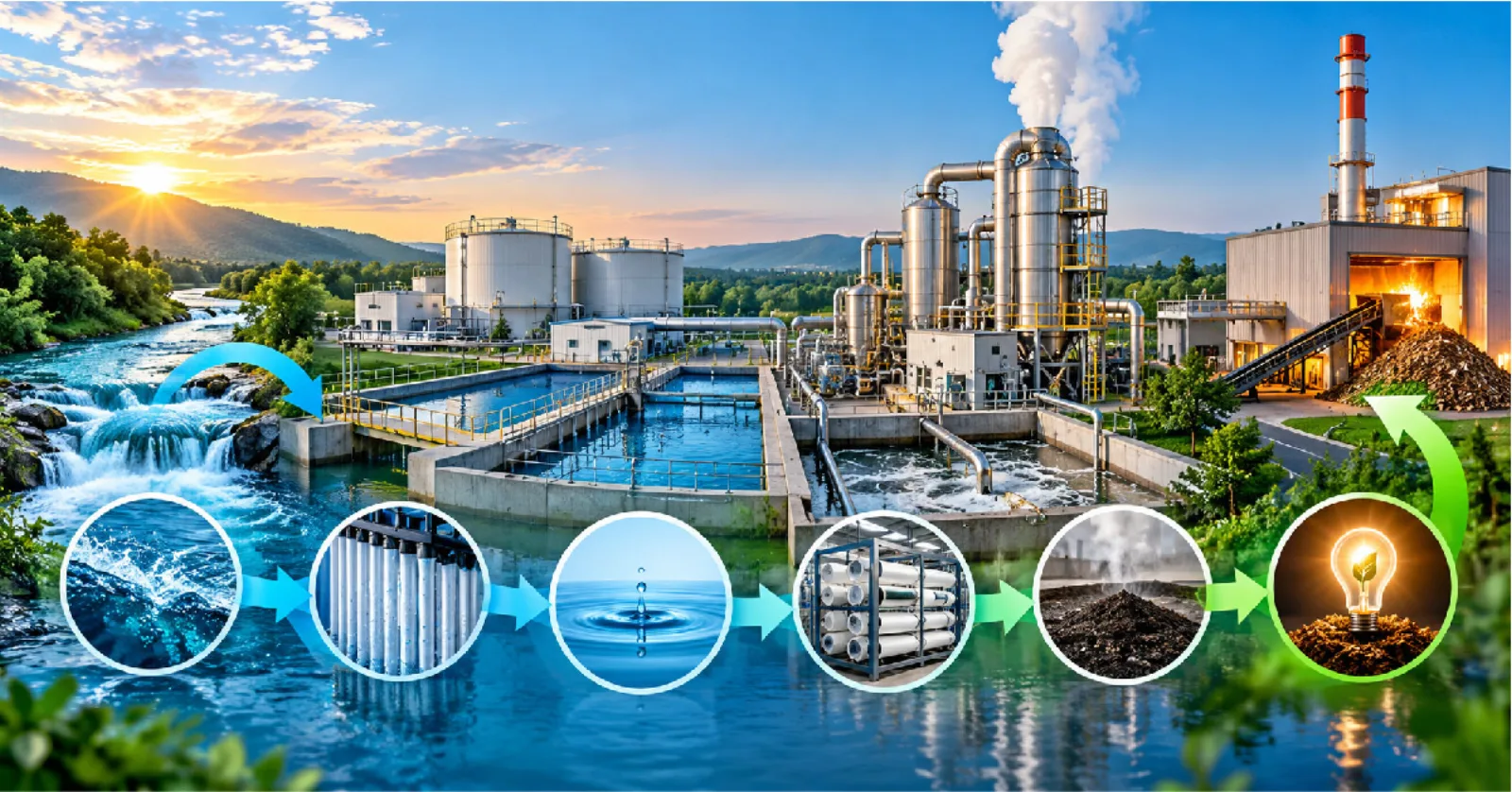
Water enters a manufacturing plant for a purpose. It may be needed for cooling, washing, steam generation or production. But what happens after that? In many factories, water treatment, wastewater handling and disposal are still managed as separate activities. Ion Exchange takes a broader approach through total water management, connecting everything from raw water treatment and industrial use to recycling, Zero Liquid Discharge (ZLD) and waste-to-energy opportunities.
This matters because a factory can have a well-performing treatment plant and still use more freshwater than necessary. Sometimes the problem is not the equipment. It is the way water moves through the facility.
Why Industries Need to Look Beyond Individual Treatment Plants
Consider a factory that buys freshwater, treats it to a high standard and uses it across different operations. Some processes genuinely need that quality. Others do not.
Meanwhile, the effluent treatment plant may be handling thousands of litres of water that could potentially be recovered.
Both plants may be doing their jobs. Yet the factory continues paying for freshwater while treating reusable water as waste.
This is one of the reasons industries are exploring total water management solutions. Rather than investing in individual treatment systems whenever a problem arises, businesses can examine the complete water cycle and identify where resources are being wasted.
The opportunities are not always obvious until the full water balance is examined.
Raw Water Treatment: Getting the First Step Right
Raw water quality varies considerably between sources.
Rivers often have water free of particulate matter and organic matter while groundwater contains hardness, high iron and high dissolved solids. Plants that use various sources of water might have to deal with different water properties all year long. As a result, the first stage of the water treatment process is crucial.
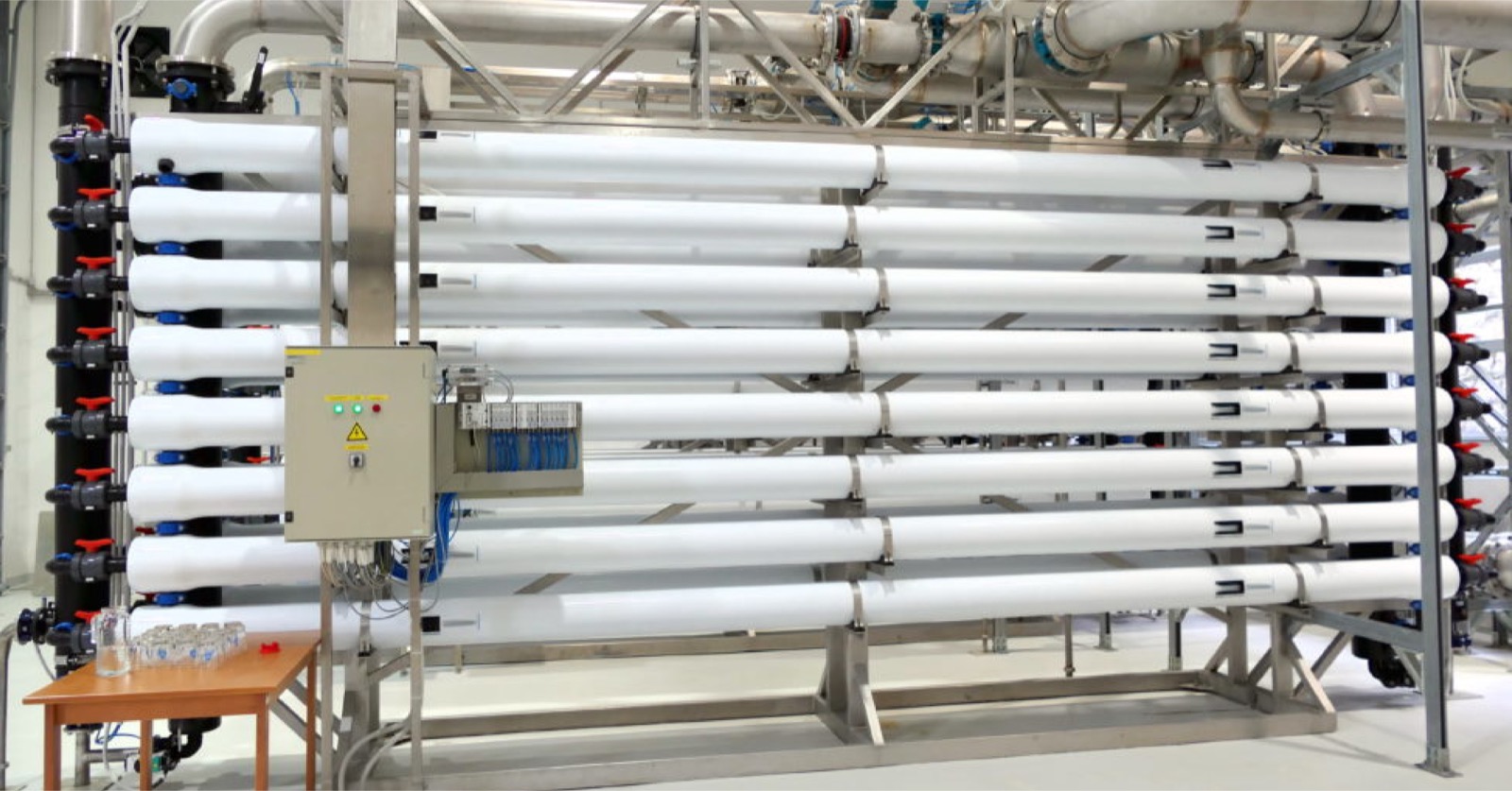
The treatment process consists of clarification, filtration, softening, reverse osmosis or demineralisation depending on the final application of the water.
The boiler system requires more stringent quality than washing operations. Treating the water to the highest quality level can raise the cost of treatment with no real gain in results.
It is necessary to understand the exact needs in quality of water in order to avoid problems associated with scale formation, corrosion, chemical consumption and maintenance issues.
Water Use Inside the Factory Deserves Attention Too
Treatment does not end once water enters the production area.
Water is lost in cooling towers due to blowdown and evaporation. The boilers use makeup water. Washing processes discharge effluents, and some industrial processes introduce chemicals or dissolved pollutants into water sources. Water losses may be considered normal according to some people. Some loss is inevitable; however, other losses may be avoided with good management practices, leak detection systems, good cleaning methods and/or adequate reuse systems.
For example, if a facility utilizes properly processed recycled water or for cooling tower make-up, it will use less clean water. Such decisions are easier to make when you are able to measure water consumption by processes, not only by water supply.
Wastewater Recycling: Turning a Disposal Stream into a Resource
Industrial wastewater is not always suitable for immediate reuse. It may contain suspended solids, organic pollutants, oils, salts or chemicals that need removal.
However, with appropriate treatment, some of that water can return to productive use.
Wastewater recycling may involve biological treatment, clarification, ultrafiltration, reverse osmosis or advanced oxidation, depending on the water quality and reuse target.
The important point is that recycled water must be suitable for its intended application.
Water used for cooling does not necessarily need the same treatment as water used in pharmaceutical production. Designing every recycling system for the highest purity level may make the project unnecessarily expensive.
There is also the question of reliability. A recycling plant should be designed around changes in wastewater quality, not simply one favourable laboratory result.
When properly planned, wastewater recycling can help reduce freshwater dependence and the quantity of treated water requiring discharge.
Zero Liquid Discharge: When Water Recovery Goes Further
Some industrial facilities face strict discharge requirements or operate where freshwater availability is a major concern.
For particular types of facilities, the concept of zero liquid discharge will become an essential aspect of the water management process.
The main goal of zero liquid discharge technology is the elimination of the discharge of any liquid waste through the recycling of usable water and conversion of the remaining waste into concentrated residues or solids requiring proper disposal.
Depending on the type of wastewater, the technologies employed may include membrane separation, evaporation or crystallisation.
However, the implementation of zero liquid discharge needs careful design.
Thermal treatment involves high energy consumption. Directly sending larger volumes of wastewater to an evaporator may lead to very high expenses.
That is why it is essential to consider the entire process starting from water treatment to zero liquid discharge as a whole integrated system.
The main goal is to decrease water use at the beginning of the process, properly separating the hard-to-treat wastewater streams and using efficient membrane processes for the recovery of the treated water.
Where Waste-to-Energy Fits Into the Picture
Water is not the only resource that can sometimes be recovered from waste.
Certain industrial effluents contain enough biodegradable organic matter to support anaerobic treatment. Food processing, distilleries and some agro-industrial operations are examples where this may be worth investigating.
During anaerobic digestion, microorganisms break down organic material in the absence of oxygen. The process produces biogas, which can be captured and used for heating or electricity generation after suitable conditioning.
This offers an opportunity to recover energy while treating organic waste.
However, waste-to-energy is not appropriate for every facility.
Wastewater with low biodegradable organic content may not generate enough biogas to make the investment worthwhile. Inhibitory compounds, fluctuating loads and the cost of gas handling can also affect feasibility.
A proper assessment needs to examine the available organic load, potential biogas generation and how the recovered energy would be used.
Why an Integrated Approach Can Improve Project Economics
Imagine a manufacturing facility planning to expand production.
The conventional response might be to install a larger raw water plant and increase effluent treatment capacity.
But what if the existing facility could reduce freshwater demand before expanding either system?
Perhaps cooling tower blowdown could be treated for reuse. Maybe high-strength wastewater streams could be separated, or improved process control could reduce unnecessary water consumption.
These changes might alter the size and type of equipment needed.
This is where total water management becomes a financial decision as much as an environmental one.
Instead of calculating the cost of each plant separately, businesses can compare freshwater purchases, treatment chemicals, energy use, discharge costs, sludge handling and future expansion requirements.
The lowest capital investment does not always deliver the lowest operating cost.
How Ion Exchange Supports Total Water Management
Ion Exchange provides integrated water and environment management solutions covering raw water treatment, process water purification, industrial wastewater treatment, water recovery, ZLD and waste-to-energy applications.
The company’s array of solutions encompasses treatments like advanced oxidation, evaporation and other processes.
This enables clients to address all their water issues holistically.
One may be interested in the quality of incoming water, while another will want to minimize wastewater discharge.
One client may want to return treated water back to the process, while yet another may be evaluating how to remove salt from water discharged.
Ion Exchange meets all these challenges in a comprehensive manner, providing total water management solutions that allow to link the needs and not consider them as completely different investments in technologies.
However, it is important to consider site conditions, feedwater composition, operating requirements and economic calculations before making the final decision on which technologies to select.
Manage Water as One Connected Resource
Industrial water does not stop being valuable after its first use.
Some of it can be recovered. Certain waste streams may offer opportunities for energy generation. Other streams require specialised treatment before safe disposal.
A practical total water management strategy brings these decisions together, from the first litre entering the facility to the final stage of wastewater and residual waste handling.
For industries planning new facilities, upgrading treatment systems or reducing freshwater dependence, it makes sense to examine the complete water cycle before investing in additional capacity.
Looking for an integrated approach to industrial water and wastewater management? Connect with Ion Exchange to explore treatment, recycling, ZLD and resource-recovery solutions suited to your plant's operating needs.
Frequently Asked Questions
1. What is total water management in industries?
Total water management is an integrated approach covering water sourcing, treatment, industrial consumption, wastewater handling, reuse and resource recovery. It helps facilities manage water more efficiently across operations.
2. What are the benefits of total water management solutions?
These solutions can reduce freshwater dependence, improve water-use efficiency, support discharge compliance and identify opportunities to lower treatment and operating costs.
3. How does wastewater recycling help industrial facilities?
Wastewater recycling allows suitably treated effluent to be reused in selected applications such as cooling or washing. This can reduce freshwater consumption and the volume of water requiring discharge.
4. What is the role of zero liquid discharge in water management?
Zero liquid discharge aims to recover usable water while eliminating liquid wastewater discharge. It is particularly relevant where regulatory requirements, water scarcity or wastewater characteristics justify the investment.
5. Can wastewater treatment be combined with waste-to-energy?
Yes. Some organic-rich wastewater streams can undergo anaerobic treatment to generate biogas. The feasibility depends on biodegradable organic content, treatment conditions, energy demand and project economics.